It’s a quick post from me this week because I want to rave about some Aida I’ve just finished stitching on.
I never thought it would be possible. I’ve heard people talk about soft Aida on Flosstube and for a long time I thought it was a myth. However, a few weeks ago my boyfriend and I travelled to the south coast again for the Canberra Day long weekend. On the public holiday Monday we headed over to Mogo and I got to spend a bit of money at one of my favourite stores – Rosemont The Patchwork Shop. I was able to purchase some more fabric and some beautiful cards that can be used for most events.
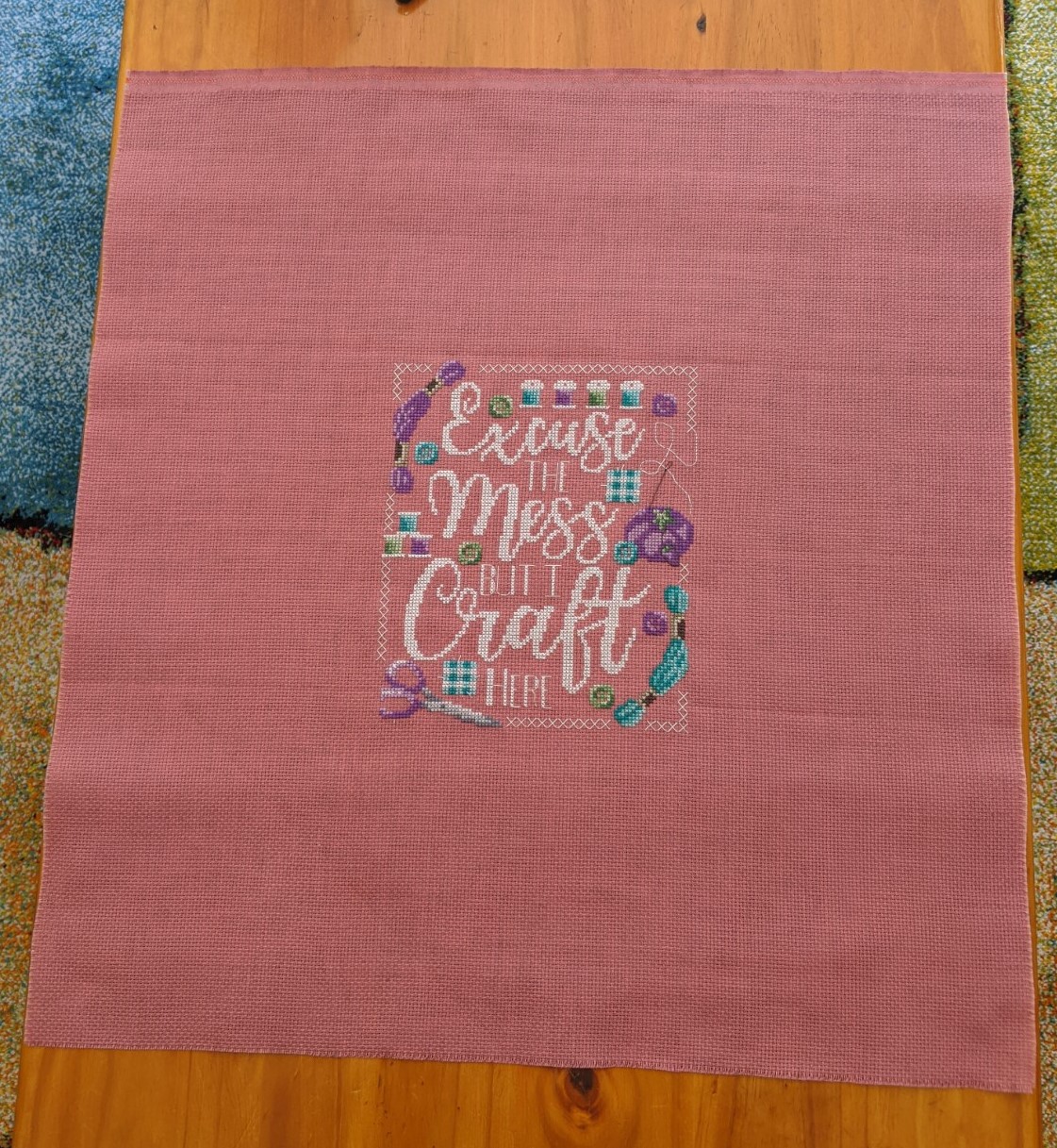
One of the pieces of fabric I purchased was some 14 count pink Aida. When I opened up the pack and started stitching, I fell in love. It was so soft and easy to work with I had to check the packaging every so often to make sure I wasn’t seeing things!
Pink Aida from ‘Rosemont The Patchwork Shop’ in Mogo, NSW Australia
I decided to stitch the pattern called ‘Excuse the Mess, but I Craft Here’ by Shannon Christine Designs and I tested out the Pattern Keeper app with this pattern. The results of my efforts are shown below:
To make the hanging, I trimmed around the finished piece and I have the trimmings stored away. After trimming the piece, I trimmed down a thin piece of cardboard to attach it to, using some double sided tape (that I also use for scrapbooking). As you can see in the above images, I’ve used some ribbon to hang it from the door handle into my craft room.
Because I stitched this pattern on pink Aida, I changed out the pink threads that were called for, in exchange for purple threads and I think it turned out pretty well. I also used some dark brown on the skeins which was not intentional until I was halfway through stitching those areas. I had misread the pattern and used DMC 844 instead of DMC 822. Oops!
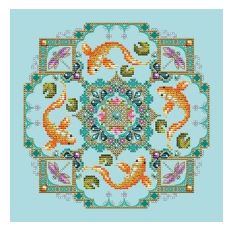
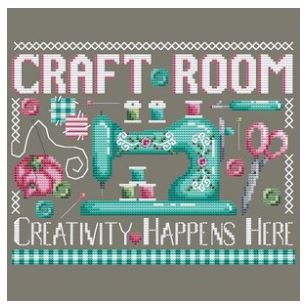
After having more a look at the Shannon Christine Designs website, I hadn’t properly realised until now, that they had also designed the Gingerbread Train pattern (see below) that I have in my Christmas Cross Stitch book that I really, really want to start stitching. I also really want to start stitching Koi Pond and Craft Room as shown below.
Until next time, I hope you all stay safe and happy stitching!
How many variations are there for you to use to frame your cross stitch? Using the phrase “how to frame cross stitch” – including the quotation marks – 21,000 results came up in my Google results. Many of the results in this search talk about the possibilities of using glass, not using glass, stretching your project over canvas, using sticky board to assist with the framing, using matting board and not using matting board.
Considering how many posts and YouTube clips there are on how to frame cross stitch, the aim of this post is to share with you, some of the most popular ways to frame your cross stitch on a shoestring budget.
The most common threads from the most popular results will tell you about:
Washing your finished project
This can be a personal choice and be dependant upon your choice of fabric and threads. There are some threads may run if they are washed or weren’t pre-washed before you stitched with them. I’ve been really lucky with all of the projects I’ve washed before framing. I’ve only used Anchor or DMC threads, mostly because they’re the most accessible brands to me and up until the last 12 months or so, I hadn’t known about or heard of any other type of threads to stitch with! Tapestry wool being the exception!
I have accidentally spilt coffee and chocolate crumbs on my projects and I’ve been very lucky to have them easily wash out. Or I’ve been able to stitch over the spots without any worries – if a mark has been left after the washing.
One of the important things I want to note is that for the majority of my projects, I’ve hand washed them in the basin of my bathroom with a little bit of hand soap – liquid or bar – in warm to cool water. I’ve tried not to rub my stitches too much, but enough to remove any crumbs or marks if there had been any. I’ve also rinsed my project with warm to cool water to remove any soap residue. I’ve then lightly squeezed my project to remove the excess water and laid it flat on a towel to dry over night.
From an audio-visual perspective, below are a couple of clips that may help you with washing your projects, if you’re feeling a bit uncertain about what to do…
‘My gridding pen washed out super easy…’ by Stitching Jules – uploaded to YouTube on 8 December 2017
‘Washing your cross stitch and embroidery’ by Peacock and Fig – uploaded to YouTube on 17 September 2016
Once dry, I’ve ironed the front and back side of my project, taking care with areas that have beads and backstitch. You may find that some people are quite particular about which side of their project should be ironed – if at all. I’ve been lucky and not had any problems. It’s also been the main times I’ve brought out the iron and ironing board!
Measurements
How large your finished project is will have a major influence on the frame size you choose. The measurements will also impact your choice in mat board and what board you have to back your project. It’s also important to note that the amount of excess fabric you have around your project will have an impact on how you frame it. For example, do you really need a metre of fabric around your project? This example is excessive, but you get my point! On average, having an inch or two – 4 maximum (5 to 10 centimetres) around your project is the perfect amount because it gives you enough room to effectively stretch your fabric and have it centred in the frame.
Choosing acid-free materials
The acid-free materials will range from the foam and mat boards to the sticky board or threads you use to lace your project. This is important because they will ensure the longevity of your project and hopefully it will become a family heirloom!
Lacing
When I first started cross stitching and the term ‘lacing’ was mentioned, I thought it was something to do with lace in fashion and homewares. But it’s actually to do with the process of stretching your project over some foam board or cardboard, so that it’s nicely centred in your frame. Below is a clip to help further explain how lacing works and how you can do it too!
‘Lacing the lazy way’ by Lindy Stitches – uploaded to YouTube on 8 August 2019
Mat board
This can be a personal choice as well. Many frames you can purchase from the shops come with its own mat board. When you have pulled apart the frame, place the matting board over the top of your project to see if the matting board enhances or detracts from your project. It’s also important to note that the purpose of mat board is to stop your project from touching the glass – if you choose to frame your project with glass. According to the Frame Shop, mat board can protect your project from moisture because of the small gap it creates between the project and the glass.
If you find the perfect frame, but you need to adjust the mat board it comes from, Peacock and Fig has put together a great clip on how to customise the mat board to suit your needs.
‘How to cut a mat’ by Peacock and Fig – uploaded to YouTube on 28 May 2015
Frames
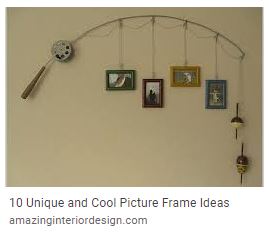
Whenever I’ve decided to frame a project, I’ve taken my project with me to the shops I want to get my frame from. This enables me to see what’s on the shelf and see if the project works with the frame. Felt Magnet recommends this in their post about framing your project as well. The aim is to find a frame that compliments your project. Tip: choose a colour in your project that you have used a little bit of. Find a frame in that colour or find some paint that you can use to paint the frame you’ve chosen. Alternatively, you may choose to wrap the frame in fabric or paper or any other medium that suits your project. Additionally, your frame can be made out of whatever materials you think suit and compliment your project. I’ve seen on the internet, how creative people have gotten with their frames. Some people have chosen to utilise materials from around their home or local stores that enhance their projects. Below are some images of what people have done:
Image from Google search. See diyinspired.com for a closer look at this frame and more ideas.
Image from Google search. See websiteherpetologistsleague.com for a closer look at the image and more framing ideas.
Image from Google search. See websiteherpetologistsleague.com for a closer look at the image and more framing ideas.
Image from Google search. See amazinginteriordesign.com for a closer look at this idea and more framing ideas.
Summary
When I’ve framed my own projects, I’ve taken a stab in the dark. I’ve not looked up anything on the internet. I’ve usually had an idea of how I’ve wanted the project to look in the frame and had a go at making it right. I’ve made the mistake of racing out to purchase a frame without my project with me and purchased a frame that’s been too big or too small. I still have some of those frames hanging around my home, in the hope that one day I’ll have a project that will suit it.
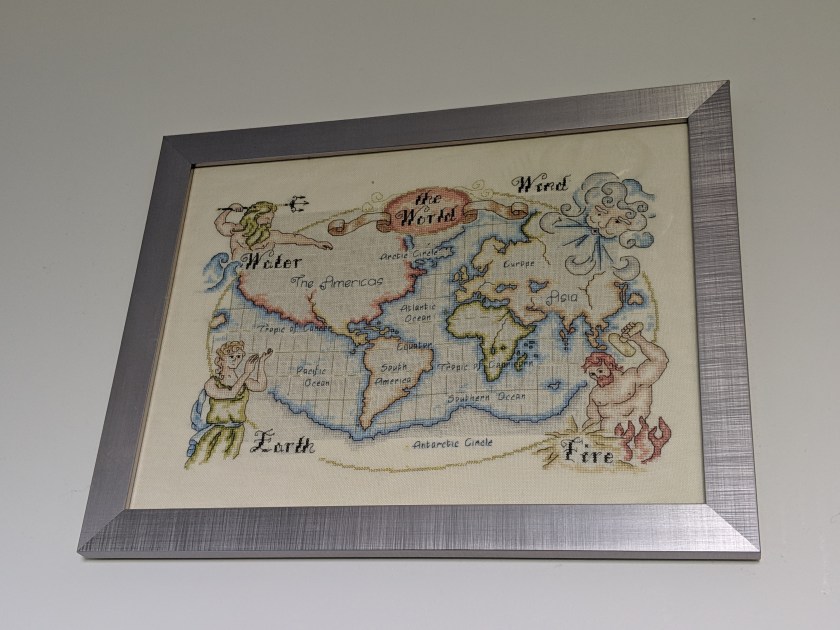
I’ve kept the glass in all of my projects and I’ve taken the risk with some of the projects by not using matboard and having the project right up against the glass. This is a huge risk with ‘The World’ project (see image below) because I’ve got it hanging up in my ensuite.
I’ve rarely used the lacing method of securing my projects in the frame. More often than not, I’ve used acid-free double sided tape to secure the project to the paper or board that has come with the frame. I have had to be careful to not have the standard picture that’s come with the frame showing through my project. I made that mistake with my ‘The World’ project (see below), but I think it’s worked out for the better. What do you think?
‘World Map: The Elements’ designed by Maria Diaz – notice the darker background. This was unintentional. The darker colours you see in the background are because of the side I used for backing the cross stitch project.
I also recommend you check out YouTube for tutorials on how to frame your cross stitch projects. They will give you the confidence and guidance on how to do what you want with your project. They may also enhance what this post has touched on.
Until next time, happy stitching!
Related reads:
Eckersleys – website for purchasing some of your framing needs (Australian store)
Frame Shop – website for purchasing some of your framing needs and guidance on why their products will be useful for you (Australian store)
If you’re like me and started your love affair with cross stitch with kits helped a lot with learning to stitch and see the finished project. So, progressing to kitting up your next project yourself seems like the next logical step!
What you need
Some of these things may seem blatantly obvious, but can easily forgotten in the rush and excitement of starting a new project. I’ve also purposely not talked about scissors, lighting, stands, hoops, frames, needle minders or any other tools of the trade that can be used while stitching a project. If you are curious about these things, check out some of my previous posts!
The pattern
Many patterns, regardless of where you’ve gotten them from, have some really handy instructions for all stitchers. I strongly recommend you have a read through them, just in case there’s something special you need to pick up from your local craft store. The instructions will tell you what the stitch dimensions are of the finished piece and many of the designers will recommend what fabric size to stitch the project on. Sometimes, the designer may suggest what needle size to use for the corresponding fabric count.
The other component of the pattern is the key that lists all of the threads you need and how much of each colour you will need to complete the pattern. This can be in the form of number of skeins or metres. Below is an example from one of my own patterns I’ve converted from a photo I’ve taken. This is only a partial list:
Example of floss list for a cross stitch pattern, minus the symbols for each colour
The numbers you see in the column for number of skeins, shows that you would need a partial of each skein. By memory, each skein comes in 8 metres in length and you may need about 1 metre of each skein. So you will have quite a lot left over with the exception of black, where you will need the full skein / 8 metres.
I strongly recommend that you take this page of your pattern to your local craft store and use it as part of your shopping list and tick or mark off each colour as you put it into your basket.
Fabric
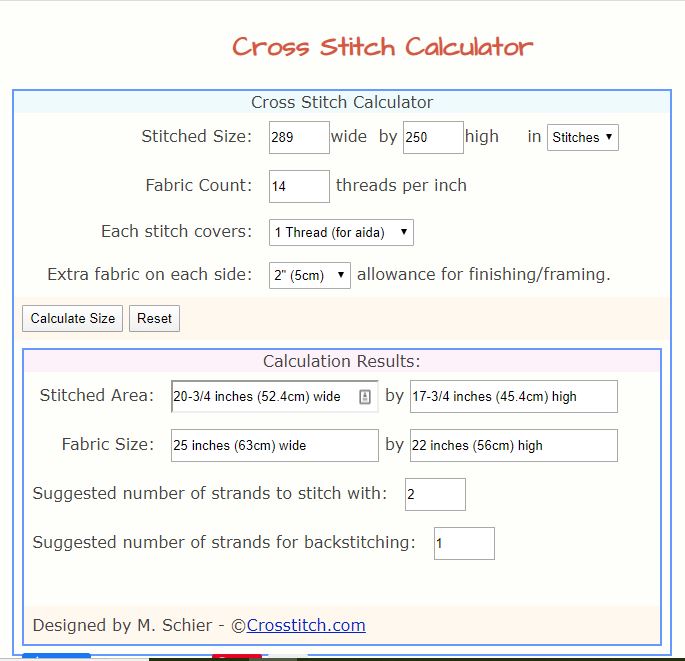
Sometimes the designer may not state how much extra fabric you will need to stitch your project. They will just state how big the project is and recommended fabric. For example, the stitch size may be 289w by 250h on 14 count navy blue Aida. This is where a fabric calculator can be helpful to calculate how much you will actually need. The website Crosstich.com has an awesome calculator that’s very easy to use. Below is an example of how it works, using the dimensions I’ve used in this paragraph:
Snippet from Crosstitch.com website calculating how much fabric is needed
You may also see in the above snippet, is the option to select how much extra fabric you want around the edge of your project. I’ve selected 2 inches/5 centimetres. There is the option to have 3 inches/8 centimetres. This is your personal choice and potentially how much you can afford to pay for fabric.
The additional reason why I’m talking about the amount of extra fabric you need, is to help with stitching the project and finishing it. The extra fabric will mean that your project can be snugly in a hoop or stand or whatever you choose to keep the fabric taught and your stitches neat. If you choose to frame your project, there’s enough fabric to stretch it into place so that it looks just the way you want it!
It’s also your choice for the numbers you enter for the number of strands for your project. This won’t have an impact on the size of fabric the calculator recommends for you. It may have an impact on how many skeins per colour you choose to purchase!
Purchasing your fabric
In this digital age and the internet at our fingertips, we can choose to purchase our supplies online or we can find out where our local craft store is that sells the fabric we want and need. In Australia, the two major craft stores closest to where I live are Lincraft and Spotlight. From there I can purchase pre-cut Aida in a some colours, counts and dimensions. I can also go in store and purchase some fabric off the roll in a size that I need. The fabric they have on rolls will vary from store to store. Thankfully, there are smaller business that I can purchase other fabrics from and they have a wider variety of fabrics, count size and dimensions.
I’ve also really enjoyed going to craft shows and checking out the fabric section of store to see if they have any off-cuts I can purchase for potential projects down the track. I find that they have many fabric colours that I haven’t seen on the internet.
Preparing your fabric
Some people hate it when the edges of their fabric start fraying while they’re working on their project. I’ve seen on some American floss tube clips that the edges of their fabric already have been serged as part of the process that American shop owners choose to do. If you have an overlocker or know someone who has one, you can use it to go around the edges of your fabric. Another option is to use your sewing machine and use the zig-zag stitch or you can hand sew the edges.
Example of serged edge – image from Google search
If you are choosing to use Aida, some people have complained about how stiff it can be when they start using it and it’s turned them off from wanting to use it ever again. I’ve certainly experienced some stiff Aida and it has been annoying to get it into the hoop. I have found that over time, the fabric softens as I continue to work with it. I’ve also heard of people washing it before they use it and trying to soak it with fabric softener or similar products. How successful they are, I’m not sure. All I can say is do what works for you!
Floss
The size of your project will depend on how many colours you need to purchase. If you’re needing to purchase a lot of colours, you could:
purchase a few colours at a time and stitch with them until you need to purchase some more
purchase all of the colours in one go
raid your stash to see if you have some left overs from previous projects
have a chat with stitchy friends and family who may be able to give you some of their left over colours
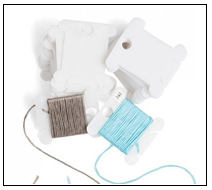
Tip: If you’re purchasing your floss from a craft store, I strongly recommend you include in your basket some floss holders (aka bobbins) and a storage container to hold all of your colours. The image below is an example of what you can purchase.
Plastic Bobbins – image from the DMC.com website
You may hear of people talking about ‘bobbinating’ their threads. What they’re doing is winding their threads onto the bobbins, like the image above (that come in plastic and cardboard) and writing on the bobbins or using stickers like the ones you can purchase in the image below. If you conduct a search in your preferred search engine, you should be able to come up with some stores who stock these awesome stickers!
DMC Floss Stickers – image from Google image search
Needles
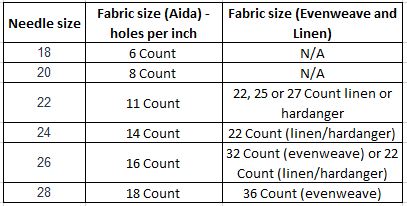
The size of the needle you use for your project will depend on the size of fabric you’re using. Using the right needle size will mean you’re stitches will be neater and there won’t be any obvious holes from your needle. Below is a table of what needle size you’ll need for the fabric size you may be stitching on:
Needle and fabric chart – information from the websites DMC.com and mystitchworld.com
Another thing to consider with your needles, is whether they’re silver all-over or have a gold or brass colour around the eye of the needle. This comes down to personal preference. Some people find that the needles that are gold plated move through the holes in the fabric smoother than the silver needles. Some people also find that the silver needles tarnish over time from the oils and other excess moisture and crumbs from our fingers, and may impact the ease of the needle moving through the fabric and thread on their projects.
Armina from Stitch Floral wrote a great post about ’10 things to remember about hand embroidery needles’ and suggests the use of ‘a strawberry cushion filled with gritty emery powder, pull the needle all the way through it in one direction.’ The aim of this is to sharpen the needle and remove any moisture on it, resulting in your needle remaining sharp and moving through your fabric smoothly.
Admittedly, I’ve been pretty lucky with my needles in the sense that they have tarnished a bit over the years through wear and tear and moisture on my fingers. The only adverse affect my projects have had from me using these needles is me using the wrong needle for the size of the fabric I’m working on. More often than not, I’m using needles from previous kits I’ve stitched or snaffled out of my sewing box.
That said, I agree with Armina from Stitch Floral when she says that needles are inexpensive. It’s possible to pick up a pack of needles from your local craft store or online for a few dollars. If you’re not sure on what to do with your old needles that you don’t want to sew with anymore, check out the post by Superior Threads in the related reads at the end of this post!
Putting it all together
Thankfully there are many, many Flosstube clips from a variety of stitchers who have been wonderful in sharing how they organise their projects. Hopefully you find some of the clips below of use and interest!
‘How I Approach My Cross Stitch Projects’ by CatCrazyCreations. Uploaded on 13 October 2015
‘Floss Tube 8: How I Setup and Start Large Cross Stitch Projects’ by Stitching Jules – Uploaded on 2 March 2017
‘How I do large cross stitch projects’ by Stitching Jules – Uploaded on 5 December 2017
‘Tutorial – How to start a cross stitch project’ by Stitchin’ Mommy – Uploaded on 20 April 2017
Final thoughts
I hope this post has helped you with kitting up your own project. It’s been a long time since I’ve started a project that’s been kitted up for me and I find kitting up my own project can be rewarding and it can show me where the gaps may be in my collection. My boyfriend has been amazingly patient when he’s been with me in the craft stores and I’ve been busy finding all of the threads I need. He’s also started helping with finding the threads as well and that’s helped a lot!
At the end of the day, the strongest recommendation I can provide you is do what works for you. If a pattern recommends the use of linen, but you find that the count size is too small, use the calculator to find out how much fabric you need for a smaller count size. If floss bobbins aren’t your thing, floss organisers like the ones you get in your kits can be re-used. Have a chat with fellow stitchers and find out what they do. They may have a different system to what I’ve suggested in this post that works really well for you.
At the start of this month, I set myself the goal of finishing the page I was working on for each of the active projects I have on rotation. I have been stitching my little heart out for most of this month and I think I’ve done pretty well. Especially since last post I was feeling a bit down and flat and not thinking that I would be able to achieve the progress I’ve wanted for each project.
There have been a few days where I’ve not stitched because I’ve been too tired from work and I’ve not slept well the night before, or I’ve been busy with other things. So without further adieu, lets get into it and see how I’ve gone!
Four Seasons Kittens
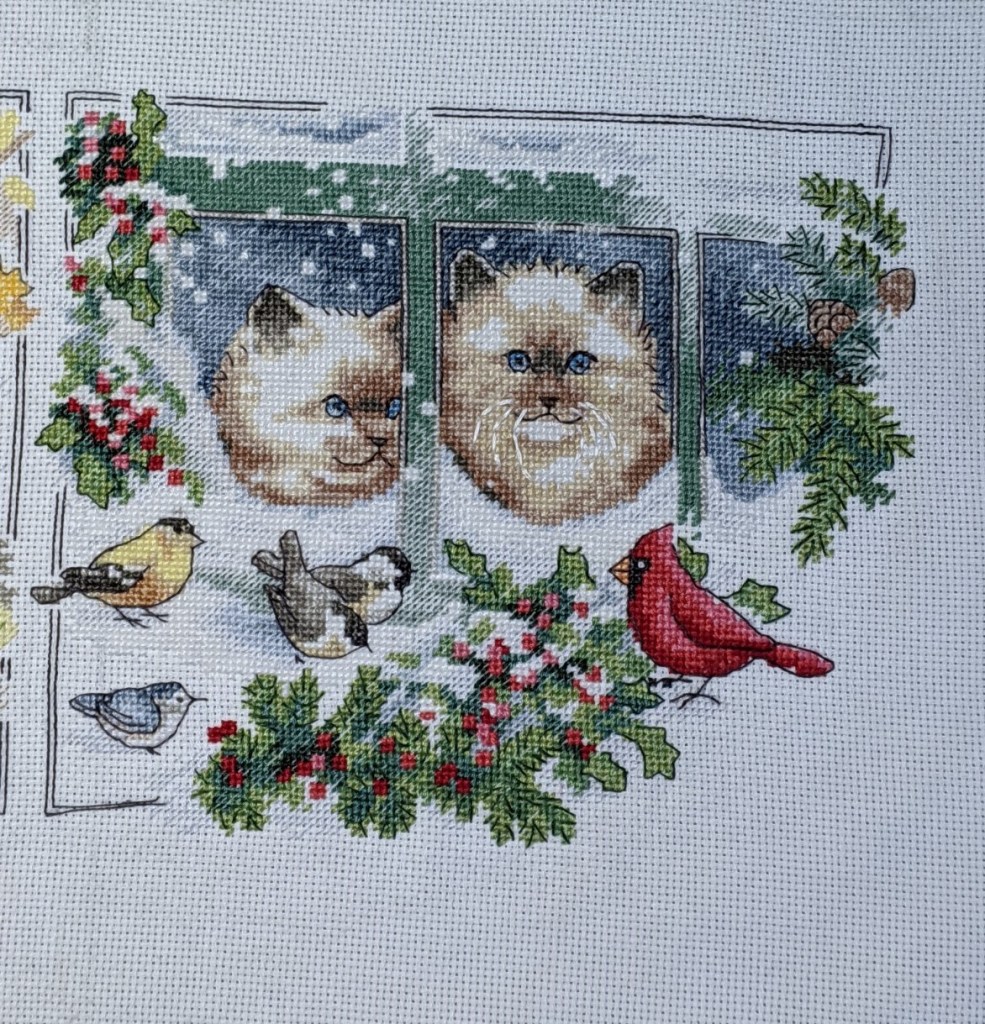
I have finished all of the half stitch and full crosses the pattern has asked for and I’ve gotten the majority of the back-stitch around the called for areas. I just need to give one of the kittens some whiskers and finish off the frame for the quarter, and I’ll be able to move onto spring or summer!
‘Four Seasons Kittens’ by Dimensions – Progress as of 29 February 2020‘Four Seasons Kittens’ by Dimensions – progress as of 11 January 2020
Midnight Fairy
A page finish and then some…
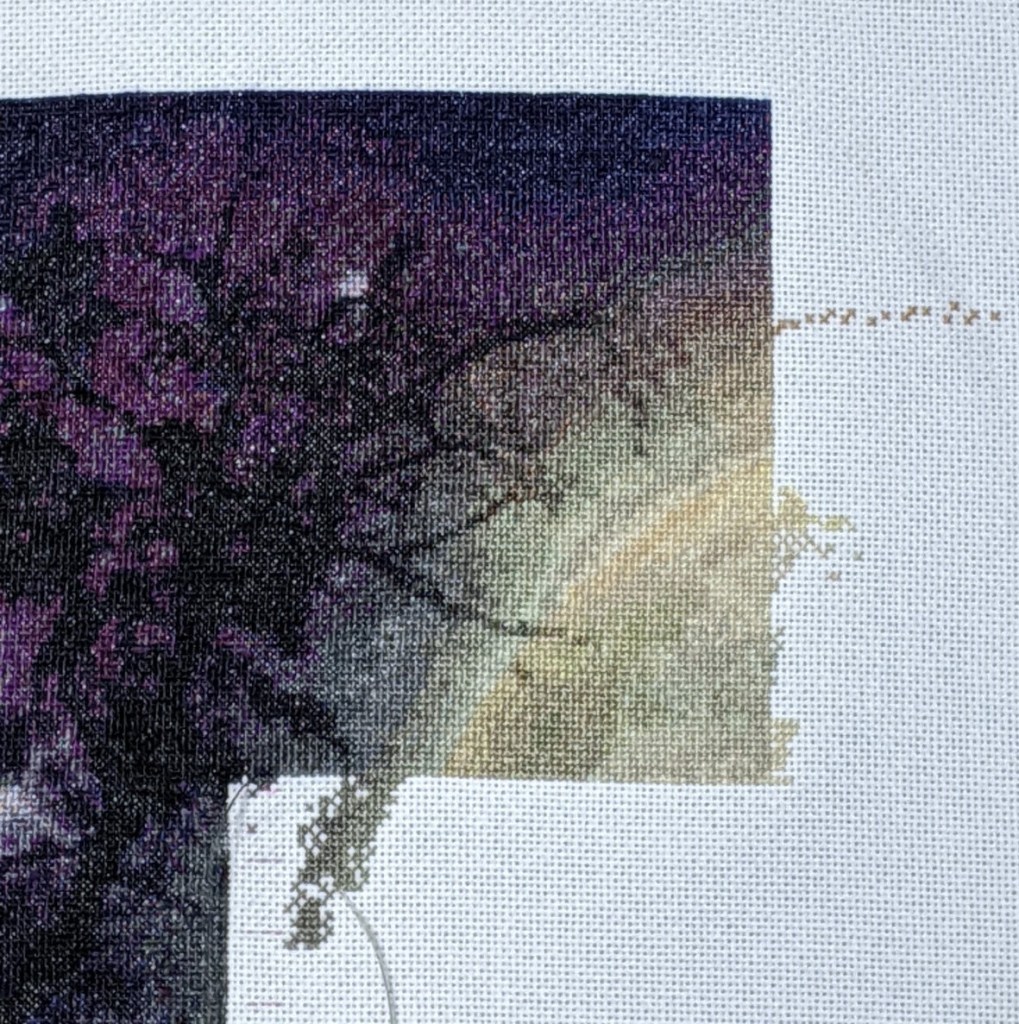
Moonlit Waters Fairy by Heaven and Earth Designs – Progress as of 29 February 2020
Because there was some confetti that I had to finish on this page, I wanted to make the most of the thread I had on the needle at the time. So I started looking at neighbouring pages to see if I could stitch anything there and what you see is the result of what I found.
Fishing
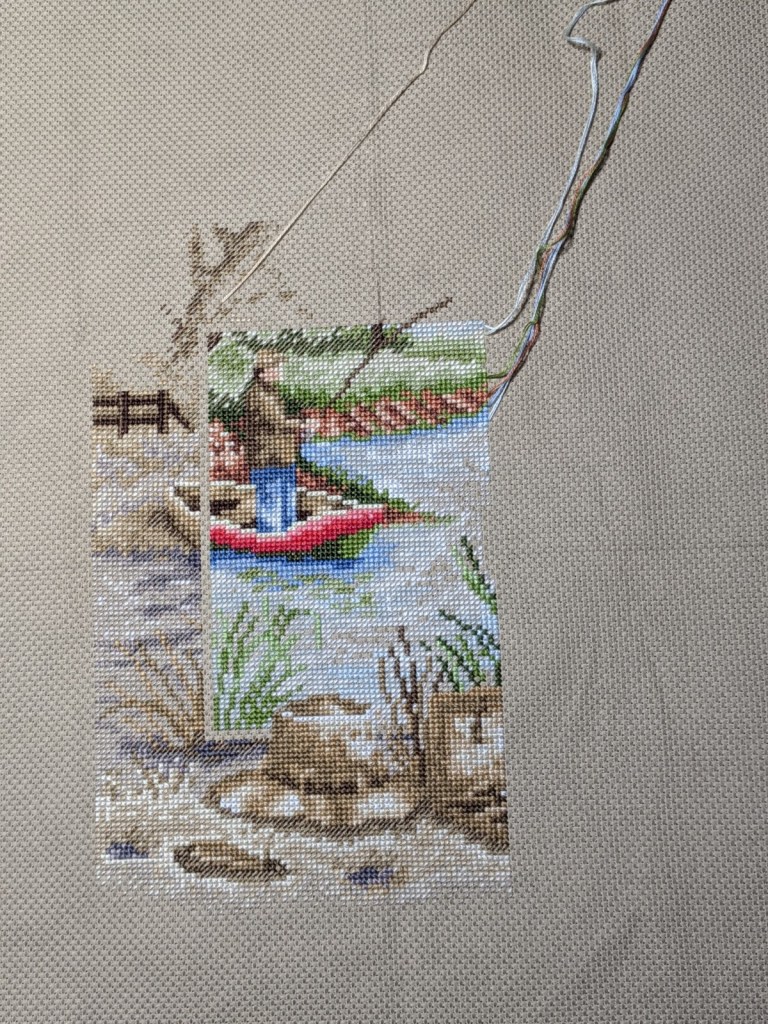
I achieved a page finish with this project! The area I have been focusing on for February, is the bottom of the pattern that has a lot of greys and browns it. There is a bit of back-stitch needed for this area to help give the hat, some bullrushes and fence some definition. I’ll get to that when I’ve finished all of the full and half stitching for the project. Theoretically it should be easier if I do that!
‘Fishing’ progress as of 29 February 2020‘Fishing’ close-up of my focus area and page finish as of 29 February 2020
Gundaroo Mini Mushroom
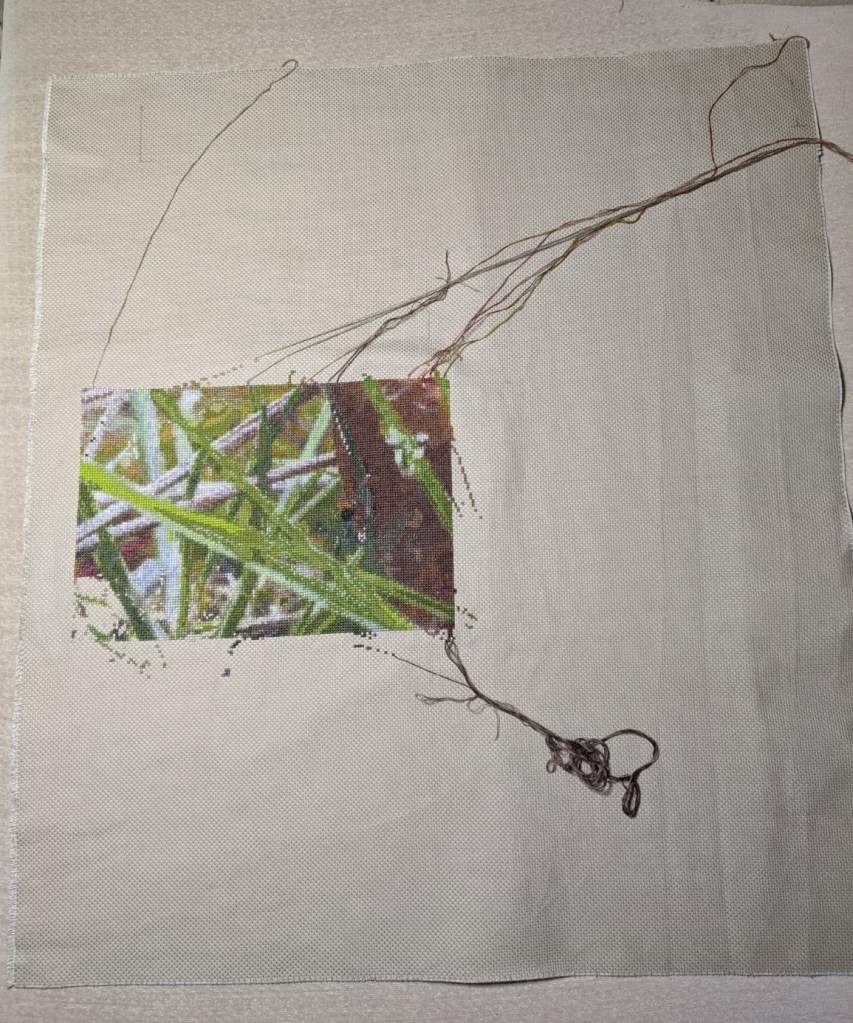
I’ve been battling some leg pain while stitching some of this page and I’m really annoyed that I haven’t gotten more done. The short story is that I don’t stretch as much as what I should after my gym sessions and runs and I’m an office worker. As a result of so much discomfort I’ve been experiencing lately, I haven’t been able to finish the page for this one. I am frustratingly close as you will see in the pictures below…
‘Gundaroo Mini Mushroom’ by Kristen Gawronski – progress as of 29 February 2020
To help put the image below into context, I’ve completed page 6, which is more the the centre of the fabric, and I’m close to finishing page 5. I’ve decided to start in the centre of the fabric because I’m not sure if I’ll have enough fabric to finish the entire project. The other thing to bear in mind with this project is, when I first put this pattern together, I had told the software that it would need to fit onto 28 count fabric – or there abouts. I then changed my mind and decided to keep most of the dimensions but try and stitch it on 14 count fabric instead…
‘Gundaroo Mini Mushroom’ by Kristen Gawronski – progress as of 29 February 2020
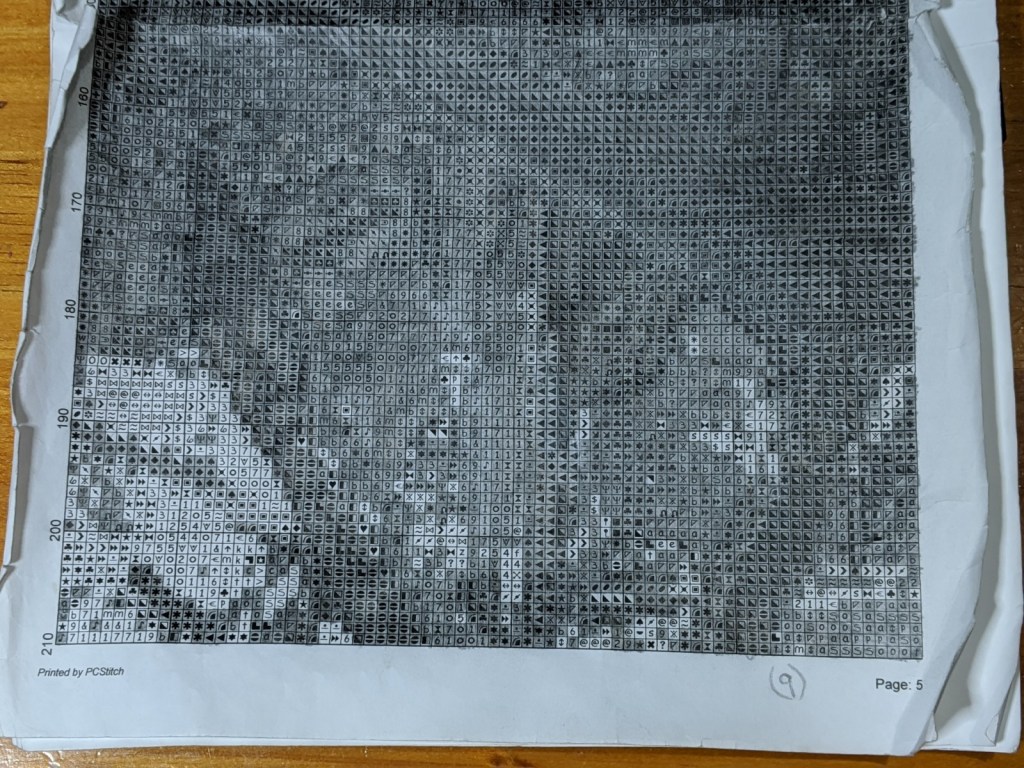
The annoying component with this pattern is the amount of confetti stitching for the bottom left corner of this page, which you will see in the photo I’ve taken of my pattern. It’s not as bad as other projects I’ve worked on over the years or even now with the HAED I’m working on.
However, in recent days when I’ve been stitching it, I’ve been seriously been contemplating scanning the pattern and seeing if it would be compatible with pattern keeper app. If it does work, it would make my life soooo much easiser! Because there are 148 colours in this pattern and some of the symbols are very similar. So it can take me a few minutes just to find the symbol on the key, to figure out which thread I need for a couple of squares!
‘Gundaroo Mini Mushrooms’ by Kristen Gawronski – pattern showing the confetti stitching and what remains to be stitched for the page as of 29 February 2020
Now that February is over for another year…
What now?
As I’m writing this post, Sunday, 1st of March is drawing to a close and whilst I have many new projects lined up and ready to go, I’m not sure if I’m ready to start them yet. Starting new pages of my existing projects would be exciting and I’d be significantly closer to getting the projects finished and off rotation for good. The question is though, do I need a break from them because I’ve been working on them so intensely for the last 20 odd days? Should I bring back into rotation some other projects that have been sitting idol?
One of the positive things for March though and the rest of this year is that I’m not going to be doing any official study with uni. Earlier this year, I had written about being accepted into the University of Canberra to complete a graduate certificate and I had been really excited about doing it. However, as time got closer to classes starting and getting the schedule for them organised, it all became a bit too hard. That process also helped me to realise that I really wasn’t as keen to do the study as what I thought I would be, when I had enrolled in the course back around August 2019! The good thing through, I that I have shown myself that I can get back into uni if I want to and it’s still an option later down the track. I’ve got work to focus on at the moment and I really want to keep progressing things with this blog and my stitching.
Small running update
It’s been a long time since I’ve talked about running and how things are going there. For the last few weeks I’ve been experiencing some muscle pain in my left leg that has stemmed from me not stretching enough. It has also meant that I’ve not been motivated to get out and about and go for a run or walk. With the help of my trainer at the gym and a remedial massage with a physio, the muscles are getting better. So much so that I’ve been able to get out running again! They’ve been short runs so far – 2 to 3km in distance and intervals, meaning I would run a full kilometre and walk for a minute or two then run again until I was done.
I need to pick up my game a lot more for this month because of the 5km fun run I’ve booked myself in for the first weekend of April 2020. I really want to feel prepared for the run rather than be feeling too casual and hoping for the best. Also, the course is different this year and I’m feeling pretty confident with it because it’s a similar course I’ve run during my own free time.
Anyway, that’s enough from me for this week. Stay tuned and until next time, happy stitching!
















 The XStitching Runner